|
590 WVLK |
|
WVLK
Photos | WVLK Surveys | WVLK Airchecks |
WVLK Jingles |
|
Know
anything more about this station? Have any WVLK-AM airchecks, photos or
promotional material?
Drop us a line. |
|
WVLK History
By
Scott Wills
WVLK-AM 590 was first licensed in 1947,
with studios located in Versailles, KY. (Thus the VLK, Versailles,
Lexington, KY). They moved shortly afterwards to Lexington, in the Phoenix
Hotel, where they remained until approximately 1980, when they moved to
their current location in the Kincaid Towers. Throughout all of this time,
Paul Dunbar (PD as he was known) was the Chief Engineer, until his
retirement in 1986.
WVLK started out as a 1KW, N-DA station, but in 1959, added a fifth tower to
its 4-tower pattern and became a 5KW Daytime, 1KW night station with a
DA-2 license. Open wire feeders fed the nighttime array, which was always
great on rainy days or during ice storms. It used a Collins 5KW
transmitter until 1978 when a Harris MW-5 was purchased. The original
Gates BC-1E transmitter was kept as the standby and was used on the air
during commercial power interruptions because it was a single-phase unit,
and the other transmitters were three phase. The 30KW generator that was
installed in 1976 was only a single-phase unit, as was its 10KW backup.
Needless to say, when the 10KW generator was online, most everything else
at the transmitter site was offline.
WVLK-FM 92.9, "The Beautiful Island", went on the
air in 1961 playing easy listening music via an automation system at the
AM transmitter site. It actually was housed in a small shed at the base of
Tower #1. It was an old ITA transmitter, rated at 5KW. The station was
licensed at 32KW ERP, with an antenna height of 290 feet. In 1975, WVLK-FM
was granted an increase to Class C status. They moved to their sister
television station's tower (WKYT-TV) at 980' with 100KW ERP, utilizing a
pair of Gates FM-20H3 transmitters. The old ITA transmitter was retired in
1980, and a new Harris FM-5 was installed as the backup. WVLK-FM utilized
two separate sites for their main and backup transmitting plants. For
years, there was no STL between their AM studio and Production Center and
their FM transmitter site. All FM programming originated from the manned
AM transmitter site, using the duty operators there to program the
automation, load commercials and record feeds.
WVLK is unique in my experience for a station in the 73rd ADI to use
transmitter engineers 24 hours a day, 7 days a week. They maintain two
complete stereo studios at their transmitter site, the new building being
completed in the late 1980s, housing the AM transmitters and phasing
units, FM controls and the capability to run all operations. In my
15-month career at WVLK, I can assure you that ability to run operations
from the transmitter was used as an emergency backup at least twice. |
|
[Arty Kay was a popular
WVLK on-air personality, who passed away in 1973.
Here's his obituary as published in one of the local Lexington
newspapers on January 15, 1973.
Arty Kay Dies at 50
Arthur (Arty) Kay, whose morning program
on radio station WVLK held probably the highest local audience rating
for many years, died here yesterday of a heart attack. He was 50.
Kay had not worked since October 1970 when he suffered a stroke while
recording music at the radio station.
A Chicago, Ill., native, Kay came to Lexington in 1946, working first
for the old WKLX station, then moving in 1952 to WVLK.
He was active in virtually every local community service organization,
especially the Heart Fund, and received numerous awards and citations.
One of the first persons in the country to undergo open-heart surgery in
the early 1950s at Johns Hopkins University, Kay was featured in a radio
program broadcast nationally in 1955 for the Heart Fund by NBC. The
program detailed the story of his operation and recovery.
In 2009 we emailed Jim
Jordan, who worked with Arty Kay at WVLK, about Arty. He replied:
Died from heart attack which he had at the
radio station. Was number 1 in market for years. He was a great fellow.
Loved a 6 hr board shift. When we cut him to 4 hrs he was upset.
His hobby was poodle dogs; loved to raise and sell them. He was very
protective of HIS record closet...wore a tie to work always.
He was a delightful man...loved radio and his work and set the ratings
bar way up there in Lexington morning radio. Followed on the air by
JERRY DEAN who we hired out of OHIO.
He got tons of mail for song requests for birthdays etc....and read them
from end to end on the air.
One of his favorite sayings was GEE WHIZ......AK on a MONDAY, ETC. He
worked his own board but didn't really know how to get a live report on
or a phone interview on the air, so someone had to help with that...but
he was great.
He must have had 30 school districts report in on snow days. It was
unreal and they swore by him. NO OTHER station had anywhere near that in
LEXINGTON.
He did live a few years after his heart attack but as fate would have it
he could not speak very well after the attack.
In 2009 Rob Calhoun
provided this history of WVLK's morning show:
If I remember correctly, Arty Kay was one
of several who migrated to the "Mighty Five-Nine-Oh" from the old WKLX.
Arty's reign as morning man ended in the very early seventies. His
replacement [Jerry Dean] didn't last long and was replaced with Dan
Kelly who held mornings until about 1977. Dan was replaced by Jack
Pattie. WLAP morning man Dave Murray was hired away and did afternoons.
When Jack left for WLAP, Dave took over mornings and the PD position.
Dave left for Oklahoma City in 1982 and Dan Kelly was rehired for
mornings and PD. Dan left WVLK in 1984 and Jack returned to mornings
without the PD title and has been there ever since.
Dave Murray did mornings in OKC until he retired earlier this decade.
After WVLK, Dan Kelly worked at WWKB Buffalo (former WKBW). He
eventually replaced long time morning man Dan Neaverth and handled the
shift until KB's demise. At last report, he's retired in Buffalo. I
guess Jack wins the prize for Lexington morning man longevity;
twenty-five years not including his work during the seventies. |
|
This article below was
published in the Lexington Herald-Leader in Late Fall 1979.
WVLK Moves to New Downtown Studios
By Tom Carter
Of the Herald Staff
Ralph Hacker is pretty excited these days
about small things. Like "hands free" telephones. Or soundproof booths
which seal themselves when the doors close.
These are some of the modern trappings of radio station WVLK's new studios
in the "atrium" of Kincaid Towers on Vine Street at Broadway downtown.
Hacker, vice president and general manager of WVLK, and the other 35
members of the station's staff have settled in to the new building, also
the home of Kentucky Central Life Insurance.
Until last week, the station had been keeping a lonely vigil at the
Phoenix Hotel on East Main Street. The station was the last tenant to move
out of the old hotel, and Hacker recalls the old headquarters with quiet
horror.
"Jim Jordan (WVLK's station manager) and I had offices right in the middle
of everything at the Phoenix. If anybody wanted to go to the bathroom,
they had to go by our office to do it, and that's a fact."
Hacker added that "The big thing here is we've got two sets of bathrooms."
New restroom facilities aren't the only changes at WVLK. The station will
soon be going to a system whereby music and commercials can be programmed
up to three hours in advance, a system which will increase the station's
on-air "pace" appreciably.
Also, WVLK is awaiting approval from the Federal Communications Commission
to start using a microwave system to link studios and transmitter. Now,
the studio and the Yarnallton Pike transmitter are linked by telephone
lines. The new system will give the station a clearer, improved sound, and
less prone to interruption by accidents.
Hacker said the studio was forced off the air a few years ago when a farm
truck hit a utility pole on Leestown Pike. The truck toppled the pole,
snapped the telephone lines and took the station off the air.
The station's FM counterpart, an automated station which plays mostly
"beautiful" music, is also operated at the transmitter.
Older residents of Lexington may recall that in the 1950s and 1960s, WVLK
was one of the top station in this area of the country because of some of
its personnel.
Past employees include the former "voice" of the University of Kentucky
Wildcats, the late Claude Sullivan; disc jockey Artie Kaye, who is also
dead; announcers Reynolds Large, now at WBKY-FM; Ray Holbrook, now a
broadcasting executive in New Jersey; David Dick, now a CBS-TV
correspondent; Gig Henderson, now the head of Lexington's oldest
advertising agency; Van Vance, now a sportscaster at WHAS radio; Ted
Grizzard, retired and still living in Lexington, and former sales manager
George Webb.
WVLK (the letters stand for "Versailles, Lexington, Kentucky") was founded
in Versailles by A.B. "Happy" Chandler and Colvin Rouse in 1946 and
purchased by the late Garvice Kincaid in 1949. When the station was
granted FCC approval to move to Lexington, it settled into the Lafayette
Hotel, now known as the old Kentucky Central Building on East Main Street.
Hacker recalls the working conditions there.
"WVLK had two rooms in the Lafayette Hotel, and the control board sat on a
piece of plywood which was spread across a toilet. The engineer sat in the
restroom and operated the station."
The station moved to the basement of the Phoenix Hotel in 1952, and within
a couple of months moved to the hotel's eighth floor, the top floor.
Hacker said that previous opportunities to get improved facilities for
WVLK fell through.
Hacker said "there had been plans to renovate the Phoenix Hotel twice and
nothing happened. Then, when Channel 27 (WKYT-TV and WVLK have related
ownership) built its new building on Winchester Road we were supposed to
move out there. We didn't. And finally a new building was built for us on
Harrodsburg Road, only it was eventually sold to someone else."
At the new location, the studios are located one floor above the ground
level cafeteria currently under construction.
The studio has 6,200 square feet of space, up 50 percent from its old size
of around 4,200 square feet. Larger control rooms, with ceiling mounted
speakers and the new cartridge systems, are located closer to production
facilities and the news department. The "on air" announcer even has a
television monitor where he can see a radar tracking local weather
conditions.
But even in his new offices, where the wall-sized windows give a pleasant
view of Lexington Center and West Main Street, Hacker won't forget the old
Phoenix Hotel setting for a long time:
"Everyday we had to give ourselves a pep talk and for the last two years
we had to use a service elevator to get to work. It was worse for those of
us who had been at the station a long time, and remembered how nice the
Phoenix used to be, and how horrible the situation had gotten.
"When we started talking about moving here, our people said, 'We won't
believe it until we pay the first rent check.'" |
|
This article below was
published in the Lexington Herald-Leader in November 1984
WVLK-AM
has treat for radio fans of Arty Kay, Grizzard
By Tom Carter
Of the Herald Staff
Those who remember the nasal-voiced
disc jockey Arty Kay or the notorious man-on-the-street interviews with
Bluegrass bumpkins by Ted Grizzard have a solid treat in store on
WVLK-AM (590) from 6 to 10 am Monday.
WVLK-AM went on the air Nov. 26, 1947, marking Monday the station's 37th
anniversary. Morning drive-time disc jockey Jack Pattie, who as a
teen-ager was a radio "groupie," will devote his shift to memories of
times long past.
"I have tapes of Arty doing commercials for businesses that don't exist
anymore; Ray Holbrook doing a newscast back when they used to dateline a
story by yelling the names of cities into an echo chamber, and some old
Ted Grizzard interviews and spots," Pattie said.
"I think it will be very interesting for people who grew up around here
to hear voices they haven't heard in a very long time."
Pattie said that when WVLK moved from its studios in the Phoenix Hotel,
no one else was interested in the station's vast but unfiled library. He
grabbed all he could, and was apparently the only person who did. Like
the old and majestic Phoenix Hotel, much of the station's history was
turned into rubble.
"Back before the days of tape, the station cut commercials on electrical
transcriptions," Pattie said. "They were 78rpm records that ran from the
inside out. If they goofed a take, they would just cut a line through
the record, since they couldn't erase it."
"To give you an idea of how things change, there is not one turntable in
our new studios that can play a 78. I had to dub them off on tape and
cut the speed in half on playback to hear them," he said.
Before the Phoenix was razed, Pattie found an entire closet full of gear
that no one had disturbed for years. "We even found the original 45 rpm
record of the theme song that Arty always used, Tommy Dorsey's 'Opus
1,'" Pattie said.
The memory of the late Arty Kay, who in the 1950s was one of the first
people in America to undergo open-heart surgery, and that of Grizzard's
sparkling and spontaneous humor, haunts Pattie because as a youngster he
hung around the WVLK studios. But the past is not forgotten, Pattie
said, since he constantly hears from fans who remember the early days.
"I even have a tape of the show that the American Heart Association did
after Arty Kay's operation," Pattie said. "Jackie Gleason is the
narrator. They hired actors to play the part of Arty, his wife and other
people. But it cracked me up that the guy they had portraying Arty had
this big, deep, bass voice, since Arty talked in a high-pitched squeak."
Arty's following was legend; at one point 60 percent of the area's
morning audience tuned in to hear him. Kay died in 1973 of a heart
attack.
Other alumni of WVLK are game-show hosts Jack Narz and Tom Kennedy; US
Rep. Hal Rogers, R-Somerset, and US Sen. Walter "Dee" Huddleston, D-Ky;
and CBS newsman David Dick.
WVLK was the first station in Kentucky to promote rock music, beginning
in the early '50s. Several disc jockeys resigned rather than play Bill
Haley's "Rock Around the Clock," or anything like it. |
|
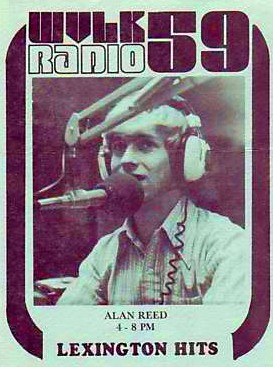
Alan Reed Remembers
WVLK
Dan Mason (Masden) helped open the door
for me at WVLK as a "weekend warrior" while I was a student at Eastern
Kentucky University. I was a Biology/Chemistry major at the university and
I quit school in my senior year at EKU (which gave my parents a heart
attack) to accept full-time nights at WVLK. (This was at the time Bill
Stakelin was still GM.) As many of us know, Dan was an EKU broadcasting
major who was also working weekends at the Big 59. I think I was to be his
replacement. Through a series of well orchestrated moves, Dan later took
over the helm of the CBS owned stations. It was his conversation with
Program Director Jim Jordan ("JJ") that opened the door.
Jim Jordan moved me to afternoons about a
year later. Then, after a hiatus due to a serious auto accident, I came
back as midday jock. I was simply much too young to appreciate the
never-to-be-duplicated learning and nurturing environment WVLK offered
me. The lessons I learned from Jim Jordan, Paul Hughes, Bill Stakelin,
Ralph Hacker, Doug McElvein, and even engineering legend Paul Dunbar would
serve me in all areas of my life. To all these people (an others I've left
out), I am eternally grateful for engraining within the value of
"localism" and "community involvement" -- two words this industry seemed
to forget in the age of consolidation, but which have served me well in
many capacities.
I left WVLK in late 1977 and even got to
help train my replacement, Bill Cody. Ralph came in one afternoon and told
me about this "young kid with the voice of God almighty!"
Lindsey Wilson College hired me to run
their unique commercial venture, WAIN, for about four years, and in 1981 I
started filing applications for my own radio station. During and after
that period I went back to school and finished that biology/chemistry
degree (in freshwater biology) and redeemed myself in my parent's eyes. I
attended Western Kentucky University and Tennessee Technological
University, completing a Masters degree in fresh water ecology. I taught
biology at Lindsey Wilson while simultaneously filing FCC license apps,
then building and selling during the FCC's "80-90" window.
During this same period, I spent some
great summers sampling streams all over Tennessee and Kentucky and was
involved in scientific research. I've presented a number of papers and a
publication or two, mostly on freshwater mussels and aquatic organisms. I
later went into public education -- mostly for more money -- and served as
principal at a number of Kentucky schools (the last in Jefferson County).
An interesting sidebar is that I never
really cut my ties with radio. I continued to assist in a few studio and
transmitter installs and in production. In a nut, I finally gave in to the
fact that I was never able to shake the image of the "radio man" around
here, so the inevitable occurred. After twenty years in the high stress
world of the public school administration, I "retired" and went into the
no-stress world of duopoly radio ownership! What a way to hang up the
proverbial guns.
To make a long story short, I bought back
my old station on Lake Cumberland -- "92.7 The Wave" (WHVE-FM) -- and in
2006 we acquired WVLC in Campbellsville. (That station is known as "99.9
The Big Dawg.")
I occasionally run into a few "Big
59'ers"; namely, Hal Rogers, Stan Cook, Duke Myer (aka Brian Thomas), and
others.
WVLK affected my life in so many ways. I
was literally the "Boy Next Door" in those years...a young pup who didn't
quite understand the degree to which I was being influenced in such a
positive way by the likes of Bill Stakelin, Jim Jordan (great guy), Doug
McElvein (awesome talent), Carl Douglas (Belcher) and the incredible news
department headed by Steve York.
I can't leave out the name of John
Randolph, who offered me a full time job at WAKY, and I was dumb enough to
turn it down. I referred him to Bill Purdom, who was smart enough to
accept his offer! Johnny was always my radio hero and recently I've been
able to personally convey that message to him. Interestingly, I had been
exchanging e-mails with Lee Gray (WAKY and WKLO), who, in my opinion, was
the best midday guy that ever lived. Lee (Darling) was living in Texas,
and one day a friend told me to read the Courier Journal article about his
death. That was why he hadn't responded. I'm just sorry we never got to
meet in person to discuss the different kinds of airplanes both of us had
owned, loved, and loathed.
My thanks go out to John Quincy for this
labor of love. He is responsible for helping save these most wonderful
moments of people and events that could have easily been lost in the dust
of tape oxides. Thanks for helping preserve the excellent product we all
worked tirelessly to put out to our public. |
|
Paul J.
Hughes Remembers
WVLK
I was first hired in 1976 to fill a slot
on weekends. When nights became available, I moved there followed shortly
by middays. I stayed there full-time for a couple of years and started an
ad agency with two other UK students while I was still at 'VLK. Richmond
Radio Shack was our first account followed by Halls on the River, The
Civic Center Shops and Dawahares to name a few. I remained at 'VLK for
five or six more years doing only weekends because I was one of a few
people who could run the UK network. Back in those days, the entire
network was fed from the Phoenix Hotel studios.
The agency became such a huge endeavor that I left radio and was producing
all the spots from my own studio. It is interesting to note that Randy
Bell, my jingle salesman from
JAM became a friend
in 1976 after I met him at VLK. I later would buy dozens of jingles from
him for agency clients. One of those was the "You've Got It" 60 second
hard song for Geno's Formal Wear. I then arranged for the You've Got It
soft song to be sold to my friend David Hume at WCBR in Richmond. The
beauty of those two cuts was they contained several shorter cuts to make a
whole. So by buying the one 60, you actually got four or five cuts to use
on the air along with the complete 60. WBLG bought
some of the other package cuts and couldn't get the two main ones because
I had already procured them in the market.
Another interesting side note: Randy Bell
is one of the owners of the station where I am now in Nashville (WNSR-AM
560). I have a small piece of the station and produce all of the local
spots, liners and promos. I am also a
professional
photographer and marketing consultant.
(More on Paul J. Hughes on
the WBLG Page and
here.) |
|
Mike
Proctor Remembers
WVLK and More
My name is Mike Proctor, I spent the
fall, winter and spring of ‘67/'68 at WCYN in Cynthiana, Kentucky. I
started up there with just the 6 to sign-off gig on Saturday nights. We
signed off at 11 p.m. They rolled up the sidewalks in the town at 10. My
first shift was the night after my Bryan Station football team had just
played Harrison County. I blocked a punt in that game and almost pulled
out an underdog victory! So, NO WAY was I going to use MY name on the air.
Theodore Nathaniel Thompson (TNT) was born. Short life though. Ted's
demise came with my hiring at WVLK the next Summer. I remember inviting
John Henderson, a Bryan Station school mate, to come up with me and read
the news during my board shifts.
In June '68, John Duvall hired me for news at WVLK, joining Ferrell
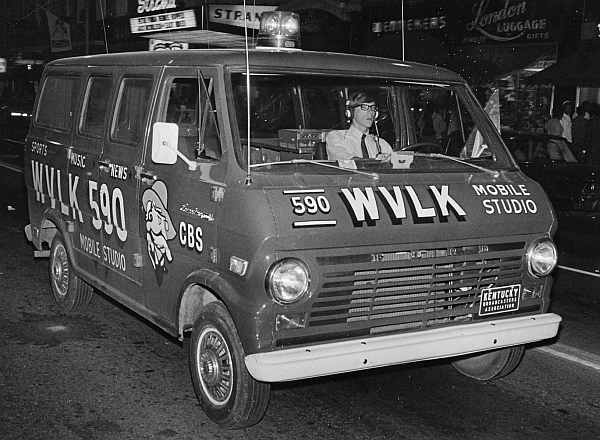
Wellman, Tom Hammond and Joe Ewalt. Part of the job was driving WVLK's
mobile news unit around town. I can also testify that the "gumball" on top
of the mobile unit is about one half inch too high to fit under the
Parkette Drive-Inn canopy. I cruised into the old Georgetown Road Parkette
and TWAAANG goes the metal canopy. The worst part was that I knew it was
going to do the same darn thing when I backed out! (I should have let the
air out of the tires....)
I remember a night when someone left a door to the WVLK studios unlocked
and, rumor has it, that Garvice Kinkaid found the door unsecured; he
grabbed a typewriter from one of the offices and threw it down the stairs
and then billed the radio station for the typewriter!
After nearly a year of bliss, rubbing elbows with Artie Kay and Denny
Mitchell, I got canned after being fined $10 for following county fire
trucks too closely in the WVLK van as they headed out Richmond Road to a
fire. I had one more news break-in before the UK game and I was really
trying to get to the scene to make a report. A member of the county's thin
brown line decided I needed to be hauled up on charges! Ray Holbrook gave
me the heave-ho. UGH, canned from my dream job!
Fortunately, my high school Junior Achievement activities included
producing the program and some ads for a JA program on WBLG Radio. Ed Van
Hook hired me for the 6 to sign-off board shift at WBLG. I spent a year
and a half at WBLG Radio, back when the studios (on Pleasantstone) backed
up to the old jail house on Short Street! I always kept the doors locked.
During that time we simulcasted the WBLG TV 11 o'clock news. I got to be
good buddies with Bill Bratton, Woody Stiles, Glen Martin and Mike
Daniels, the TV engineering staff. They were the "switchers" who inserted
the station break items in the ABC network breaks.
After my radio shift ended at 12 midnight, I would hustle out to the TV
station where there would always be a good volleyball game going on
amongst the cameras in the studio or a Frisbee toss in the parking lot!
In the summer of '70 I took time off to go to a "quickie school" out in
Kansas City; got my First Class Radio Telephone License, and cajoled Roy
White into letting me work at the TV station. I worked as a switcher
during the daytime until the end of the summer; Woody Stiles wanted his
daytime job back, and I was toast! Time for Plan B.
I hit it off with Al Sheer, the chief engineer at WLEX and spent the fall
of '70 at Channel 18 doing true engineering stuff. UGH! I was used to the
button-pushing life at WBLG-TV. However, the engineers at WLEX were like
2nd class citizens in a caste system. I just couldn't stand the work
environment and my immediate supervisor was a real jerk. By November of
'70, I had had enough!
Back to Channel 62 I went, but only 18 hours or so per week, doing the
sign-off shift on Saturday and Sunday.
On a trip out towards Lawrenceburg one
day I saw a new radio tower going up. So I talked the folks at the
fledgling WWLV (Love Radio) into giving me the 6 to midnight board shift.
I did that 5 nights a week for $2.00 per hour; and continued to work at
Channel 62 on the 4 p.m. to signoff shift on Saturdays and Sundays. Love
Radio was cool. Our PD was John Conlee, a Versailles mortician worker,
whose great voice would later wind up on Country Music Charts ("Common
Man", "Rose Colored Glasses", etc.)
I was attending UK Electrical Engineering classes full time and just could
not keep up class work and a 7 day work week. Love Radio and the weeknight
gig had to go. In April '71 I got a chance to work sign-on to sign-off on
the weekends at Channel 62. I was able to get 36-38 hours of work in two
days, so my EE grades started to improve again.
In the fall of '71, my buddy, Gary Anderson, at WVLK, said that PD (Paul
Dunbar) was looking for another transmitter rat. I signed on with PD and
WVLK and had a marvelous job of minding the transmitter and studying my EE
course work. What a great job for an engineering student. (Back in the
summer of '70, Gary and I had carpooled out in my Opal GT to Kansas City
to get our 1st Class FCC Licenses. His dad, Reed, owned WCYN. Gary and I
would later work together at IBM. Unfortunately we have lost Gary to
pancreatic cancer.)
At the WVLK transmitter site, I got a chance to sub for Tom Kendall, the
"Night-hawk" on his midnight to 6 a.m. shift from time to time. I remember
doing 60 second ad-lib ads for Columbia's Steak House from looking at a
menu of the establishment. They got their money's worth. My average ad ran
90 seconds plus. It was only later that I actually patronized the
restaurant and discovered how good that "Night-hawk" special really is. If
I had known, they would have gotten 120 second spots!
I remember that we had a little black & white TV at the WVLK transmitter
shack. On Sundays, CBS would televise the NHL game of the week. They would
talk about the red line and the blue lines; heck, I couldn't tell one from
the other. I had to get a Sunday off before I could see a hockey game on a
color TV and figure out what "icing" calls were all about!
On Sunday, May 14, 1972 I had my last transmitter trek at WVLK. I started
work at IBM's Lexington facility on Monday, May 15 as a graduate
Electrical Engineer. But the broadcast calling could not be stifled. Later
on that fall, I picked up the 4 p.m.-signoff shift at Channel 62 again and
worked both jobs until 1976.
I fondly remember tracking Woody Stiles' career with WAKY. Woody took me
up in an airplane and I blame him for the second hobby/career of mine
involving the air. (We lost Woody in a plane crash; he was towing banners
and his engine sputtered on climb-out; there's no way that that ends
well.)
In 1976 I finally gave up the broadcast gigs and settled for the Sports
Car Club of America and then the Lexington Flying Club. I guess I needed a
way to do 90 miles an hour legally!
In the air, I became first a private pilot, then an instrument rated
private pilot, then a commercial pilot, then an instructor, then an
instructor who can teach instrument lessons, then a multi-engine
commercial pilot and finally, an Airline Transport Pilot.
When IBM sold off its printer division and it became Lexmark, I did many
of the IVR (Interactive Voice Response) recordings for our Tech Support
Center. Now that I am retired from my 30 year EE career, my only
microphone is on the computer and in our airplanes.
I still yearn for the broadcast business.
One of these days I am going to have to introduce myself to Mr Wallingford
down here in Richmond. I don't know how much longer I can stay away! I get
to use a microphone most days in airplanes, but I crave a larger audience!
My WVLK compatriot, Ferrell Wellman, sits next to me at EKU basketball
games; I live vicariously through him as he keeps me up to date on
companies like Cumulus and Clear Channel. And I watch him religiously on
his new KET Comment On Kentucky Friday night show! |
|
 |
|
WVLK Photos |
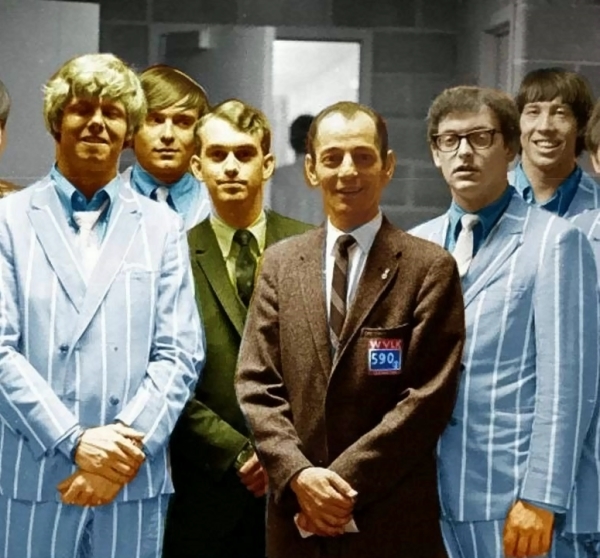 |
Jim Jordan (green suit) with
Denny Mitchell and members of The Exiles
circa 1967 at Eastern Kentucky University for a Dick Clark show |
.jpg) |
L-R: Paul Dunbar, Jim
Jordan, Bill Stakelin, Ted Grizzard,
Ralph Hacherreilly and Ralph Gabbard; Rick Shaw is in back (Circa 1969) |
 |
|
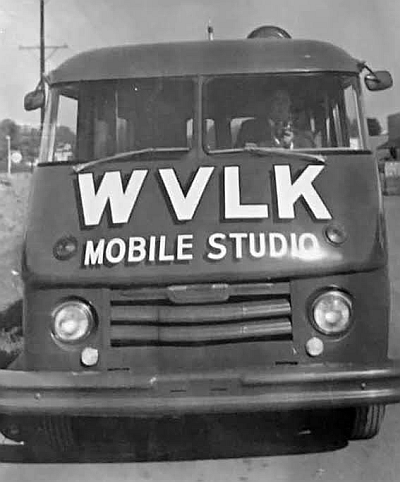
WVLK Mobile Studio |
 |
|
WVLK Mobile Studio |
 |
|
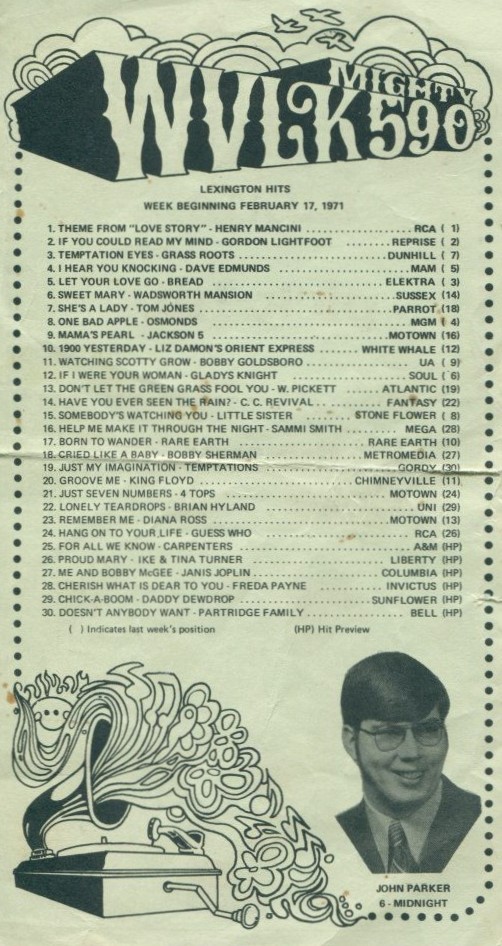
1971 WVLK music survey
 |
.jpg) |
|
Tom Devine, Cawood Ledford,
Ralph Hacker broadcasting a UK basketball game (1974) |
.jpg) |
|
UK basketball coach Adolph
Rupp being interviewed by Ralph Hacker (1975) |
 |
|
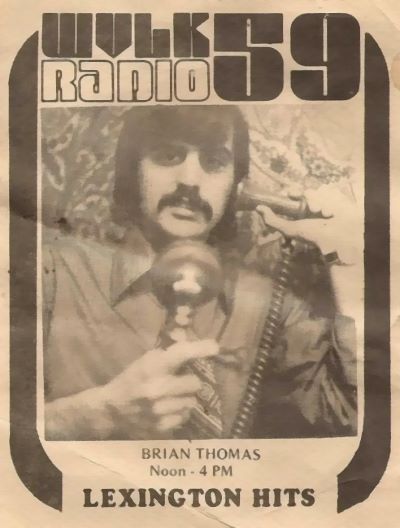
Mid-1970s WVLK music survey
with DJ Brian Thomas (aka Duke Meyer) |
 |
|
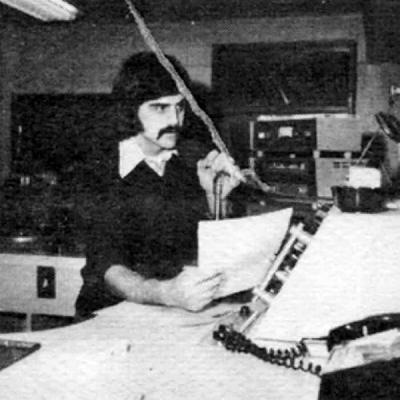
Brian Thomas (aka Duke
Meyer) in the WVLK Production Room |
 |
|
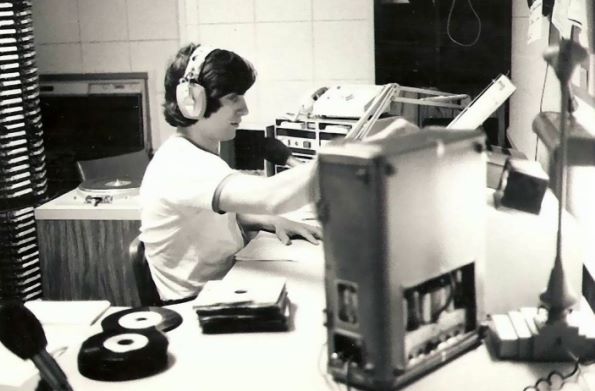
Newsman Ken Gullette (1976) |
.jpg) |
|
Ken Gullette in the WVLK
newsroom (1976) |
 |
|
WVLK logo (late 1970s) |
 |
|
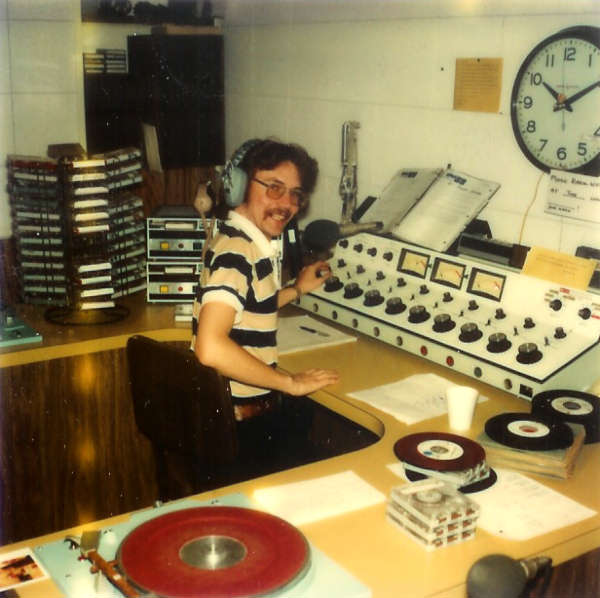
Tim Smith on the air in 1978
in WVLK's Phoenix Hotel Control Room |
 |
|
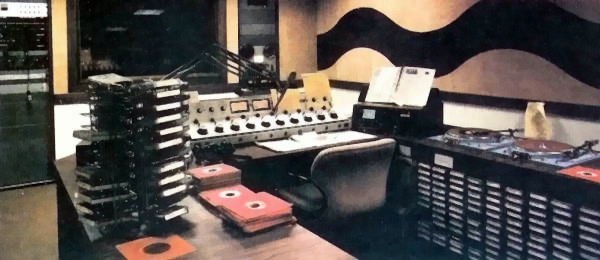
The WVLK Control Room in
Kincaid Towers |
 |
|
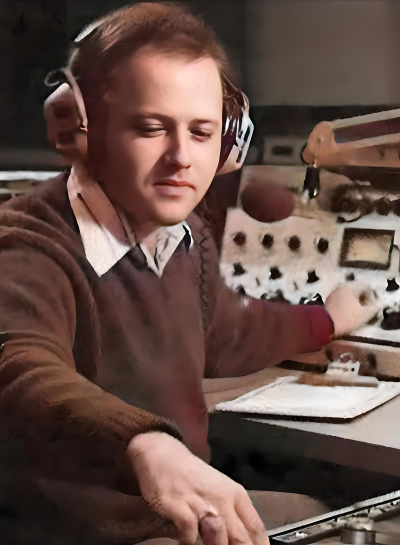
Jack Pattie in the WVLK
production room |
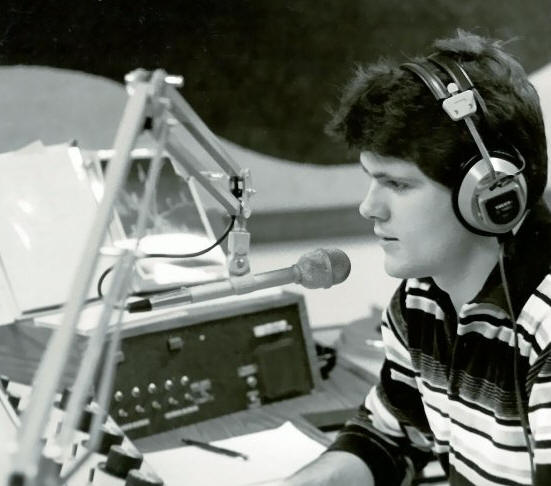 x x |
|
DJ Greg Peddicord (1981) |
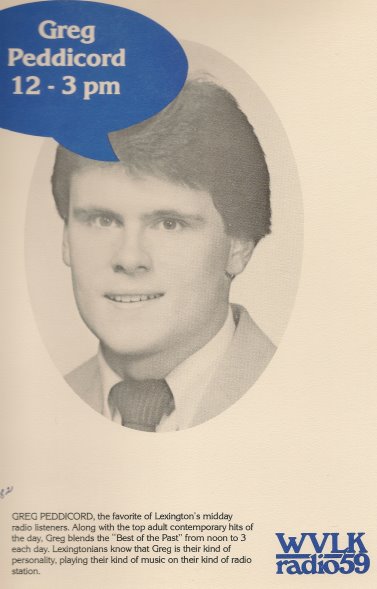 |
|
1982 promo piece for midday
jock Greg Peddicord |
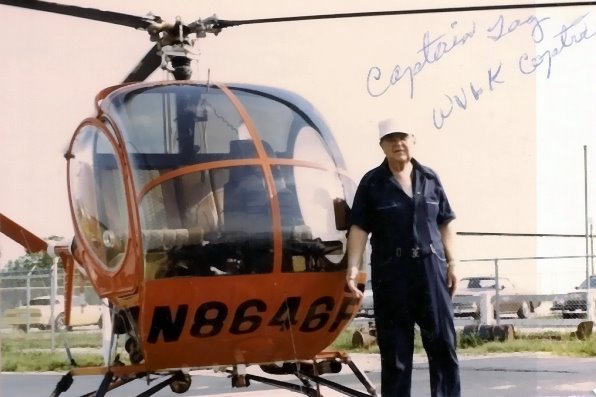 |
|
Long-time WVLK traffic
reporter/helicopter pilot Captain "Tag" Veal (1982) |
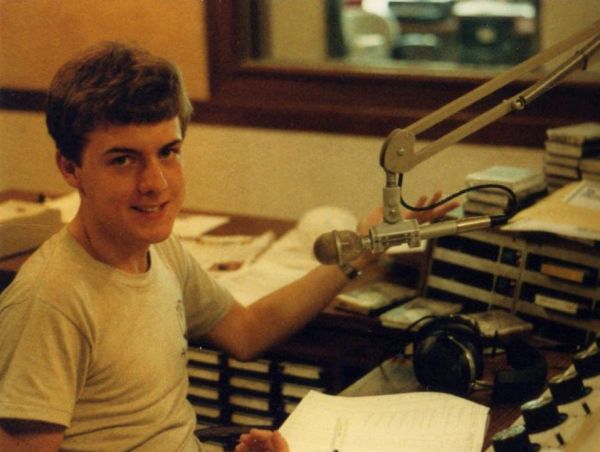 |
|
Rob Calhoun (1984) |
.png) |
|
Rob Calhoun (1984) |
.png) |
|
Rob Calhoun (1985) |
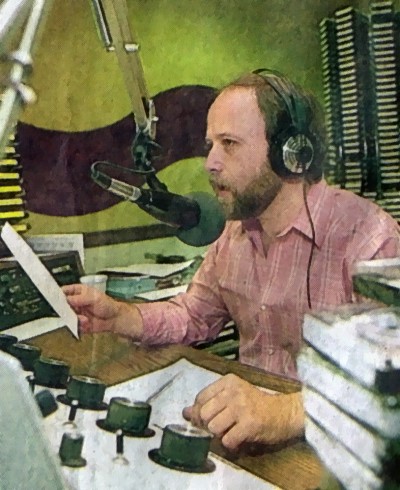 |
|
Morning man Jack Pattie in
November 1987 |
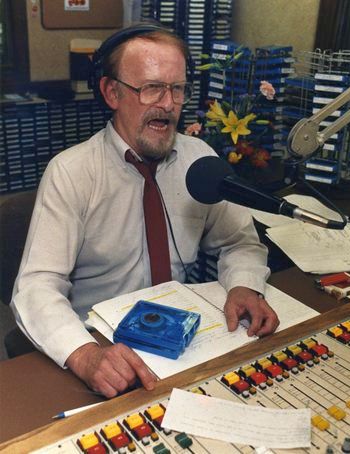 |
|
Afternoon Man Bill
Bailey (1989) |
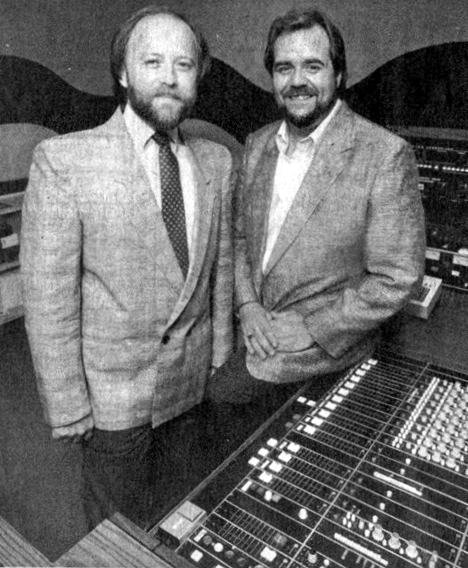 |
|
Jack Pattie, mornings on
WVLK-AM & Karl Shannon, mornings on WVLK-FM |
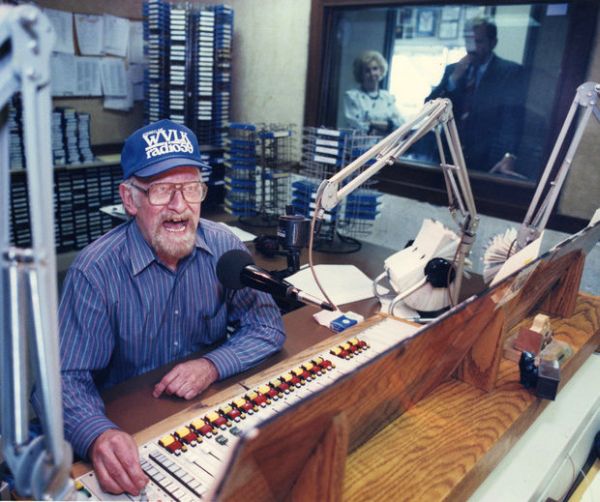 |
|
Afternoon Man Bill Bailey
(1994) |
.jpg) |
|
Jack Pattie
(2010) |
 |
|
WVLK bumper sticker |
 |
|
WVLK button |
 |
 |
|
WVLK matches (front) |
WVLK matches (back) |
 |
|
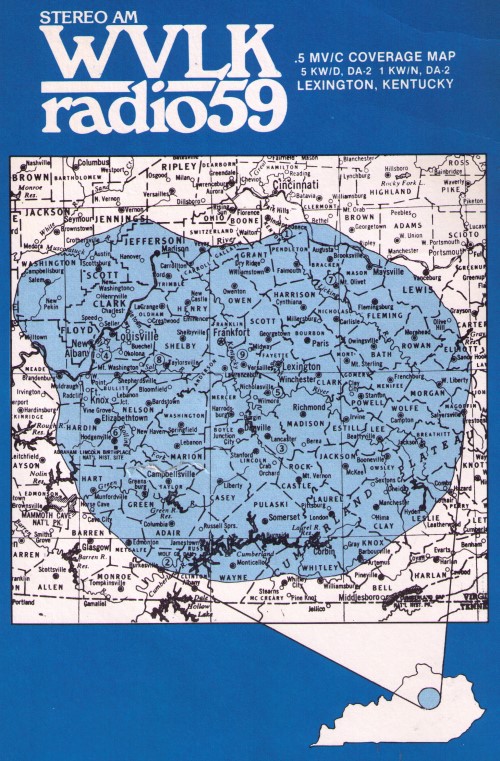
WVLK coverage map |
 |
|
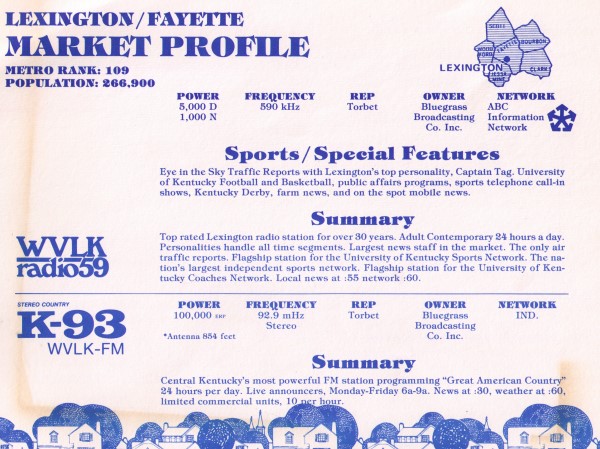
WVLK Lexington Market
Profile |
 |
|
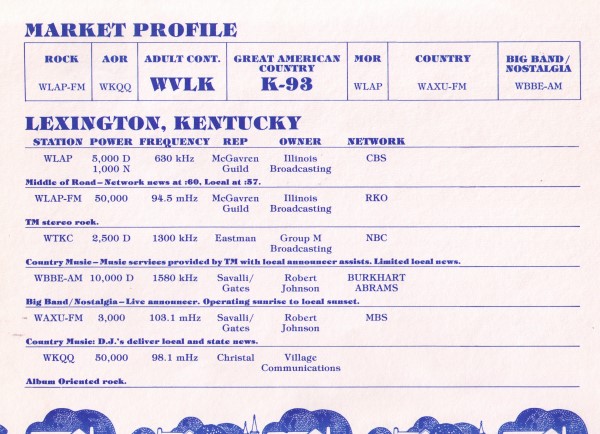
WVLK Lexington Market
Profile |
 |
|
WVLK tape box label |
 |
|
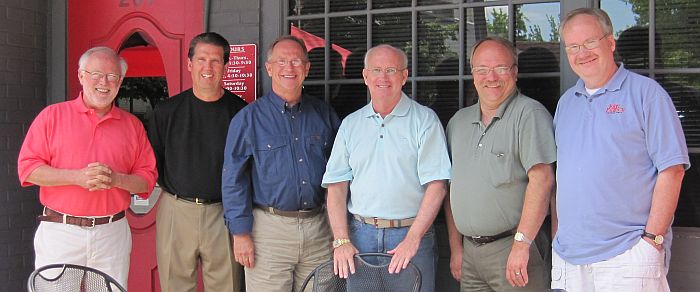
Current and former WVLK
radio folks -- Jack Pattie, Mark "Anthony" Cole, Alan Reed, Jim Jordan and
Scott Johnson -- with John Quincy outside Columbia's Steakhouse in
Lexington, Kentucky. (June 8, 2010) |
.jpg) |
|
Jack Pattie on the air at
WVLK (2016) |
|
|
|
WVLK
Music Surveys |
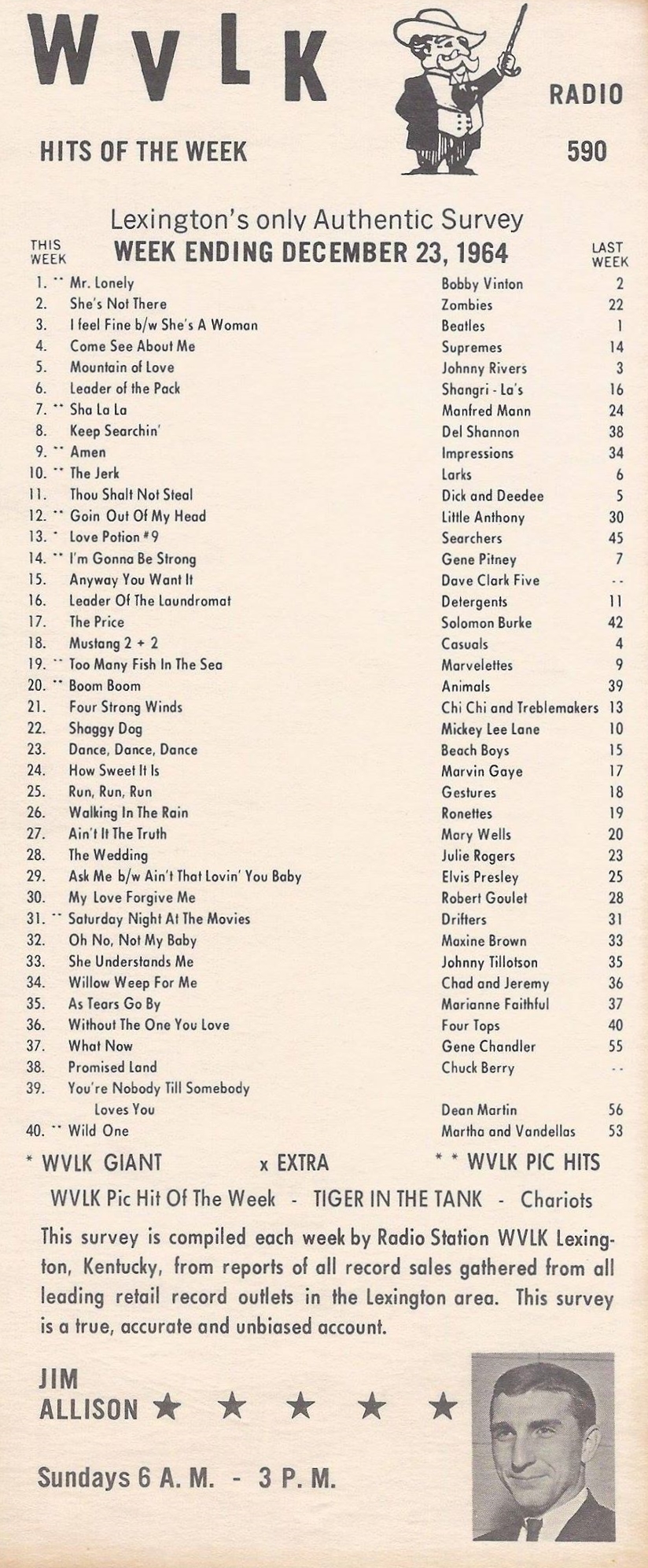
WVLK Survey
(December 23, 1964)
936 KB |
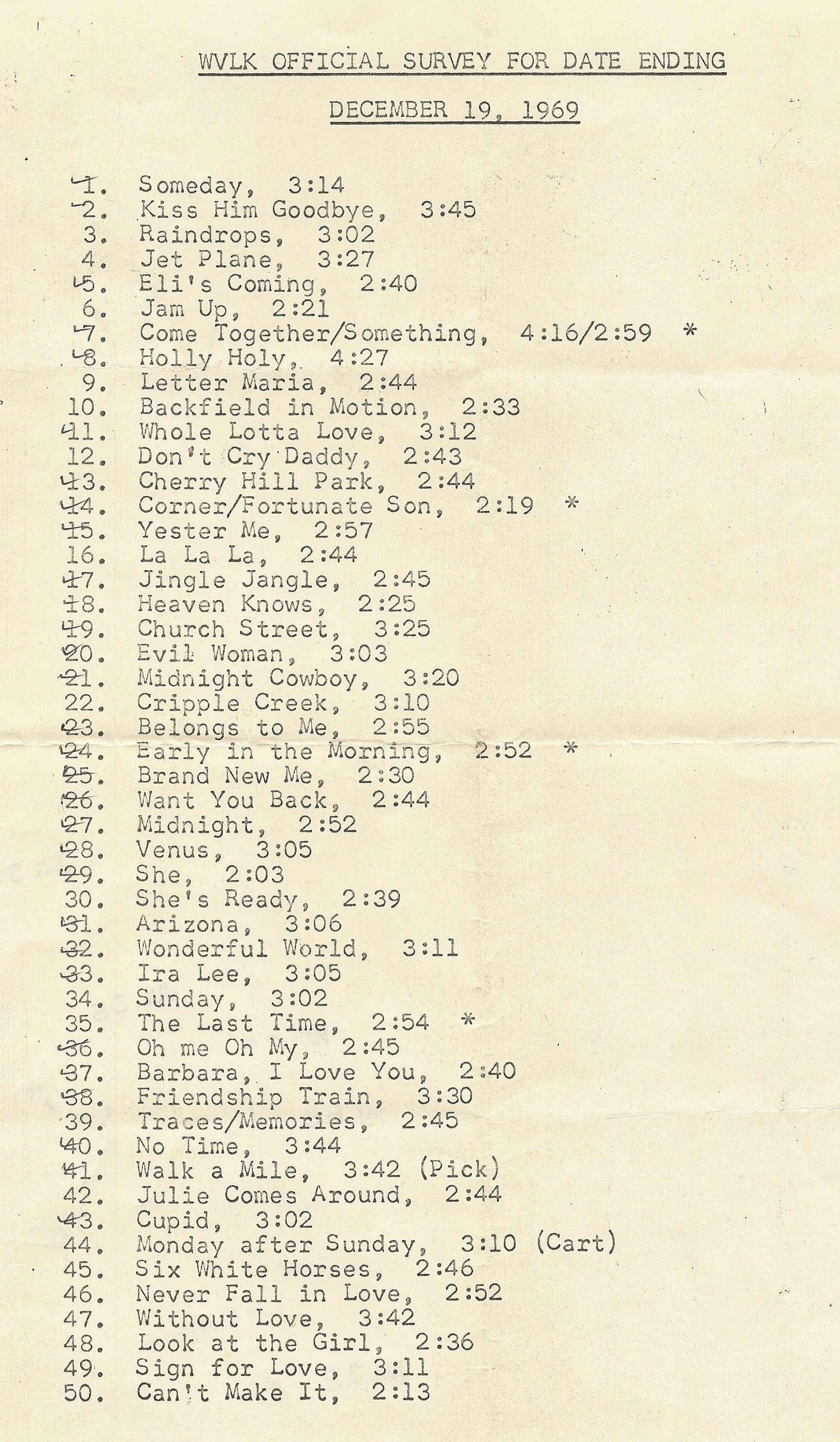
WVLK Survey
(December 19, 1969)
4116 KB |
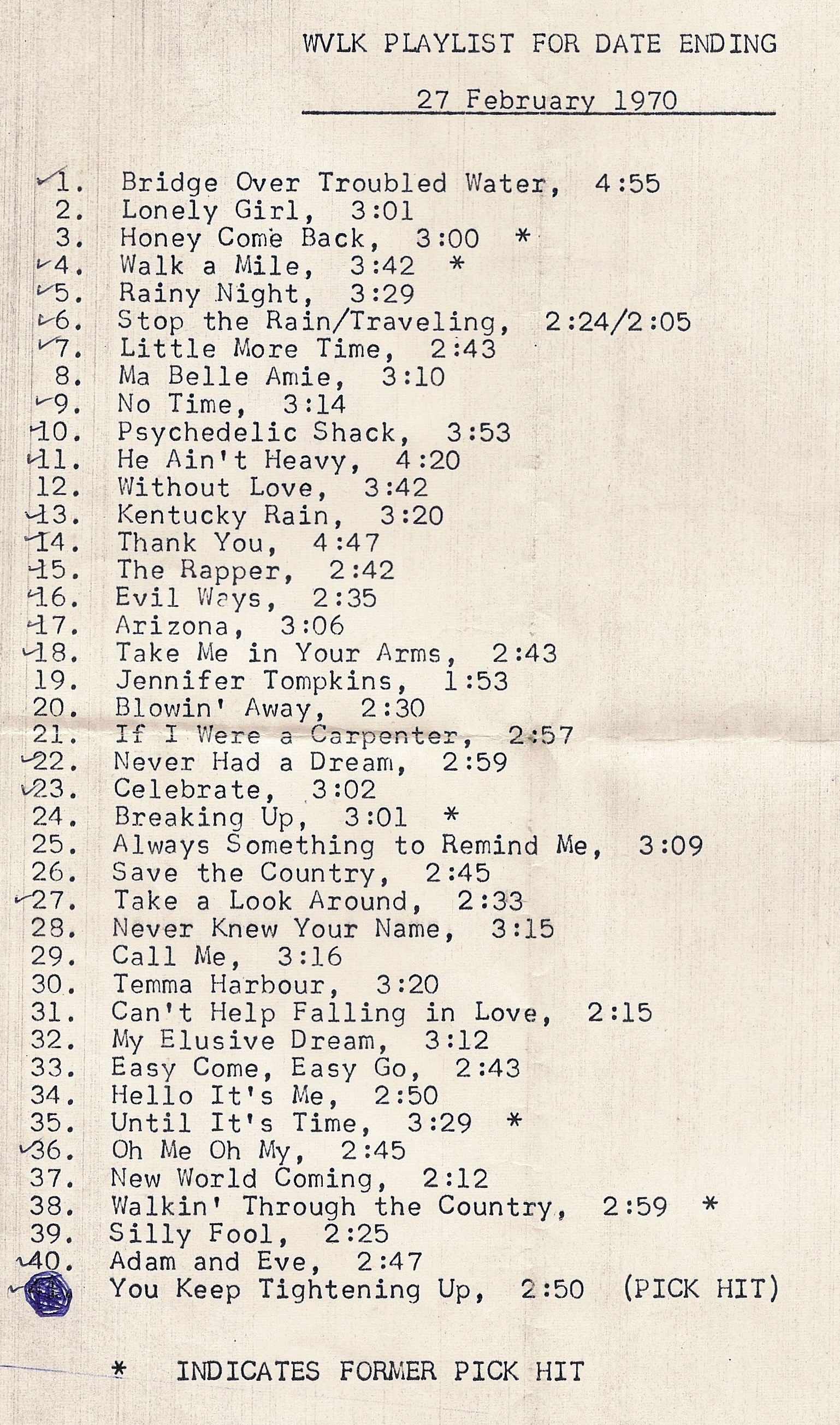
WVLK Playlist (February 27,
1970)
3394 KB |
WVLK
1962 Survey Collection (ZIP File)
29,636 KB |
WVLK
1971 Survey Collection (ZIP File)
106,741 KB |
WVLK
1972 Survey Collection (ZIP File)
141,894 KB |
WVLK
1973 Survey Collection (ZIP File)
218,350 KB |
WVLK
1974 Survey Collection (ZIP File)
190,603 KB |
WVLK
1975 Survey Collection (ZIP File)
246,248 KB |
WVLK
1976 Survey Collection (ZIP File)
170,677 KB |
WVLK
1977 Survey Collection (ZIP File)
152,678 KB |
|
WVLK Airchecks |
WVLK Partial Local Newscast (1973)
3:18 - 1552 KB |
Tyler Cox Newscasts
Montage (1974)
36:43 - 17,210 KB |
Dan Kelley (1974)
26:03 - 9159 KB |
Alan Reed (July 9,
1975)
5:54 - 2079 KB |
Paul J. Hughes (Summer
1976)
4:01 - 1413 KB |
WVLK 1976 Composite
6:14 - 2191 KBThis bicentennial
year station composite, narrated by John Henderson, features clips from
Dan Kelley, Brian Thomas, Alan Reed, Captain Tag, Mark Elton, Bill Purdom,
Mark Anthony, Steve York, Stan Cook, Becky Mitchell, Tom McCarthy, Cawood
Ledford and Ralph Hacker. |
Alan Reed (May 2, 1977)
7:43 - 2714 KB |
Neal Steele (1978)
3:46 - 1326 KB |
Paul J. Hughes (March 4,
1978)
11:29 - 5387 KB
About this aircheck Alan Reed says: "The
recorder was running in the production room and occasionally newsman
Michael 'Killer' Kilbourne, without Hughes' knowledge, would make a
comment on the tape. Especially funny was Kilbourne's comment when
Hughes missed his backtime into ABC news."
|
Dan Davidson (1978)
4:24 - 4138 KB |
Noel Thomas Newscast (Summer
1980)
4:16 - 1504 KB |
Greg Peddicord (December
1980)
5:18 - 1866 KB
Rob Calhoun says: "He is better known as
Barry Fox. This is an aircheck of him doing nights." |
WVLK's 37th
Anniversary with Jack Pattie (1984) Part 1
25:12 - 8860 KB |
WVLK's 37th
Anniversary with Jack Pattie (1984) Part 2
27:13 - 9568 KB |
WVLK's 37th
Anniversary with Jack Pattie (1984) Part 3
20:53 - 7346 KB |
WVLK's 38th
Anniversary with Jack Pattie (1985) Part 1
29:32 - 10,388 KB |
WVLK's 38th
Anniversary with Jack Pattie (1985) Part 2
29:53 - 10,506 KB |
WVLK
Promo Montage
4:17 - 1510 KB |
Jack Pattie
Captain Tag Tribute (1987)
12:31 - 4403 KB
Here's a portion of WVLK's "9 to 10 Show"
that pays tribute to the just-deceased 15-year WVLK air traffic reporter. |
Tom Casey (1987)
16:04 - 5650 KB
Rob Calhoun says: "WVLK was suffering the
same fate as other AM music stations regarding a night time audience. The
Urban format happened by rebellion. In 1984 a newly hired overnight
transmitter engineer decided to add his urban favorites alongside the
normal adult fare of Anne Murray and Phil Collins. J.R.J.R was caught
breaking format but management told him to go Urban overnights. The
program was called 'Afterhours'. WVLK along with WLAP were receiving
threats against their license renewal by groups who criticized the
stations for the lack of programming aimed to a black audience. This
solved that issue and had potential to bring revenue to nights and
overnight that hadn’t existed in a long time. Eventually, urban music was
expanded to evenings and called 'The Night Beat'. Even with the new music
the station elements revolving around news and sports were intact.
Afterhours’ host included J.R.J.R and later Toni Ryan, Keith 'Air' Jones
and others. Night Beat’s host included Rick Ellis, Mike Murphy, Tom Casey,
Mike Webb and myself. In 1988 WLAP changed format to oldies and dropped
Talknet. WVLK immediately picked up the program and NightBeat was canceled
but Afterhours continued but was eliminated weeknights and finally
canceled by the end of the year." |
Tom Casey and Post Time
with Ercel Ellis (1987)
15:11 - 5340 KB
Rob Calhoun says: "Ercel is a horse breeder
and produces a daily race result show called Post Time. The daily program
aired on WVLK through the eighties and early nineties. Today it airs on
WLXG along with a Saturday talk show called 'Horsetales'." |
Rick Ellis (December 1988)
15:09 - 5320 KB
Rob Calhoun says: "He left WVLK shortly
after this aircheck and eventually
worked for Clear Channel and sister company Critical Mass Media." |
Bill Bailey's First Day at WVLK
(1989)
35:27 - 12,468 KB |
Jack Pattie
Remembers Herb Kent (1999)
24:22 - 8571 KB |
|
Jack Pattie
with Guest Gary Burbank (November 18, 2009)
38:52 - 18,225 KB |
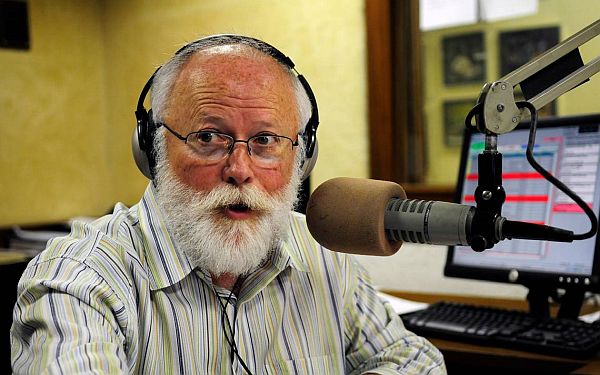
Jack Pattie to
celebrate 35 years on air in Lexington
Tom Eblen - Lexington Herald-Leader
columnist - August 23, 2010
If you turned on the radio
one morning and didn't hear Jack Pattie's voice, would this still be
Lexington?
Don't laugh. I'm serious. Pattie, who turns 58 this month, has been on
the radio in Lexington continuously since 1975, most of that time in the
morning "drive time" slot on WVLK-AM.
Pattie will celebrate that 35-year milestone Friday by inviting
listeners to stop by the Red Mile, where he will broadcast his 6-to-10
a.m. show. (The $15 breakfast buffet is optional.)
"Jack is a wonderful human being and the last of a dying breed of local
broadcasters who embed themselves in the community," said Jim Jordan,
the former WVLK executive who hired Pattie -- twice.
Pattie left WVLK in 1980 to become program director at rival WLAP-AM,
but he was fired a few months later. "I was clearly not cut out for
management," he said. Jordan hired him back, and Pattie has done WVLK's
top-rated morning show since 1983.
"People should listen to Jack and appreciate him," Jordan said,
remarking on the radio industry's cost-cutting shift to nationally
syndicated programs. "When he goes away, there won't be any more like
him."
Pattie, a Lexington native, enjoys his local celebrity, but he has never
developed a big ego. Radio is just something he always wanted to do --
ever since he was a small boy and saw a TV commercial that featured a
disc jockey sitting in a studio. "I thought, 'That's pretty cool!'"
Pattie said.
While a student at Bryan Station Junior High, Pattie played keyboard in
local teen bands and befriended WVLK personality Denny Mitchell. Pattie
was soon spending a lot of time hanging around Mitchell at the studio,
which was then in the old Phoenix Hotel. If the station manager saw him,
he threw him out. But Pattie kept returning.
Pattie's interest in radio flourished at Tates Creek High School, where
student teacher Terrell Whitaker — who also worked nights as a news
anchor at the predecessor of WTVQ-TV — started a student "broadcast" in
the cafeteria during lunch.
One day in 1968, Pattie skipped school so Whitaker could take him to
meet the manager of WAXU, a tiny country music station near Georgetown.
Without warning, they left Pattie alone in the studio to run things for
a while. He had found an after-school job.
By his senior year, Pattie was working at WAXU every afternoon and
evening. "I totally lost any interest I ever had in school," he said.
"Not that I had much to begin with."
After high school, Pattie studied at a broadcasting school in Nashville.
He worked at Florida radio stations for three years, then he returned to
Central Kentucky. Pattie said he and his wife, Marta, have never thought
seriously about leaving.
Pattie's call-in show has always been folksy and local -- "Tell me about
your first car," or "Tell me about your first date," -- or a friendly
interview with a Kentucky personality. The mayor and governor take calls
on his show once a month, and Pattie and prosecutor Ray Larson do a
"Forensic Friday" show each week about famous crimes.
In recent years, Pattie said, he has been urged to do more shows "off
the news." But while most radio talk-show hosts now push right-wing
politics, Pattie, a registered independent, would rather be a "trusted
friend" than a pundit. Radio is about entertainment and advertising, and
a good salesman has credibility. Pattie has developed a lot of it over
the years as a spokesman for many Lexington merchants.
"The best form of advertising is word of mouth," Pattie said, adding
that he has never been forced to plug an advertiser he didn't believe
in. "If people think of me as a trusted friend, and I tell them to go
see a client or try something out, they'll do it. It's an awesome
responsibility."
When Pattie is not on the radio, he still enjoys playing keyboard in
bands and appearing in community theater, which he has been doing since
he was a boy in Lexington Children's Theatre.
Pattie's drama career took a new turn in 2005, after he appeared as
Santa Claus in a local production of Miracle on 34th Street. The role
renewed a latent interest in playing Santa at hospitals and charity
events during the holidays. "When I was a kid, I thought I would like to
do that when I got old and fat enough," said Pattie, whose white beard
now stays on most of the year. "It wears me out, but it's a nice way to
be worn out."
Despite four decades of broadcasting, don't expect Pattie to sign off
anytime soon, at least if he has any say. "I'm going to do it as long as
I'm having fun and they continue to allow me to do it," he said. "I
still can't wait to get up every morning (at 4 a.m.) and come to work." |
Jack
Pattie's 35th Anniversary Show
August 27, 2010
Many
former WVLK on-air people and local dignitaries were guests including
Alan Reed, Alan Stein, Ben Chandler, Bill Meck, Bob Damron, Brereton
Jones, Carl Nathe, Damon Thayer, Dick Gabriel, Don Blevins, Don Pratt,
Ed Wan Hook, Ernie Fletcher, Jack Conway, Jack Kain, J.L. Lynn, Jim
Gray, Jim Jordan, Jim Newberry, Keith Yarber, Kruser, Kyle Whelan, Lee
Todd, Louie Hillenmeyer, Mark Anthony, Mark Romanelli, Noel Thomas, Paul
J, Hughes, Ralph Hacker, Ray Holbrook, Ray Larson, Robert Lindsey, Ross
Martin, Steve Brashear, Sue Wylie, Tom Leach and Tim Philpot. |
|
Hour 1 Unscoped |
Hour 2 Unscoped |
|
Hour 3 Unscoped |
Hour 4 Unscoped |
|
|
|
WVLK Jingles
and IDs |
 |
|
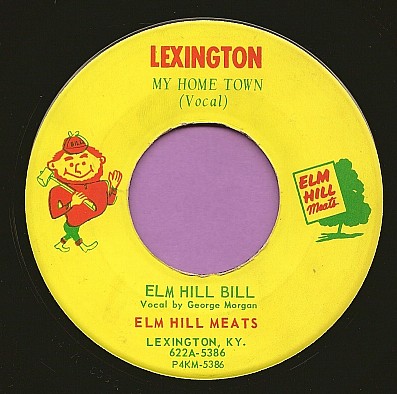
In 1963 WVLK did a promotion
with Elm Hill Meats where a 45 rpm record was distributed with the
Lexington-customized version of the PAMS "My Home Town" jingle (sung by
Jean Oliver, instead of Terry Lea Jenkins who usually provided vocals for
the "My Home Town" cuts) and a Elm Hill Meats "Elm Hill Bill" jingle sung
by Grand Ole Opry member George Morgan. The non-banded "A" side started
off with the "My Home Town" jingle followed by the Elm Hill Meats jingle
with a few seconds of silence between them. The "B" side contained a big
band instrumental version of "My Home Town". Listen to the record's
contents below: |
Lexington My Home Town
1:35 - 747 KB |
Elm Hill Meats Jingle
:56 - 440 KB |
My
Home Town Instrumental
1:36 - 756 KB |
WVLK
Richard H. Ullman IMM Jingles
1:01 - 478 KB |
WVLK Early '60s Star Station Breaks
Produced by Stars International, Inc by
Richard H. Ullman
1:54 - 894 KB |
WVLK
PAMS Series 18 Jingles
4:42 - 2206 KB |
WVLK
PAMS Series 30 Jingles
:23 - 180 KB |
WVLK
PAMS Series 31 Jingles
2:08 - 1000 KB |
WVLK MARS Productions All
Heart Jingles
12:19 - 5781 KB |
WVLK Pepper-Tanner Now
Acapella Jingles
1:58 - 922 KB |
WVLK Pepper-Tanner Now
Sound Jingles
4:09 - 1950 KB |
WVLK Showcase
Productions Jingles
9:55 - 4652 KB |
WVLK TM
Productions Propellants Jingles
3:07 - 1466 KB |
WVLK TM Productions
Image 73 Jingles
4:49 - 2253 KB |
WVLK TM Productions You
Jingles
7:31 - 3528 KB |
WVLK JAM 1979 Composite
Jingles
5:47 - 2711 KB |
WVLK JAM Pro/Mod
Meltdown Jingles
3:42 - 1740 KB |
WVLK JAM The Fyre Jingles
2:40 - 2506 KB |
WVLK JAM On Target Jingles
4:41 - 4402 KB |
|
For more information on PAMS jingles, go to the PAMS Website.
For more information on Pepper-Tanner and TM jingles, go to the
TM Studios Website.
For more information on JAM jingles, go to the JAM Website. |
|
All audio is in
downloadable MP3 format. |